From Abzu to Abyzou: Tracing the Abyss Demon's Origins
The name
Abyzou conjures images of ancient dread, a shadowy entity blamed for some of humanity's most heartbreaking tragedies: miscarriages, stillbirths, and the sudden, inexplicable deaths of infants. Across the Near East and Europe, this female demon haunted the periphery of human existence, a chilling personification of envy and despair. Her legend, steeped in the earliest fears of the unknown, offers a fascinating journey through centuries of syncretic magical practices, religious evolution, and the human quest to find meaning in suffering. Far from a mere mythical footnote, Abyzou represents a profound cultural artifact, revealing the deep-seated anxieties surrounding reproduction and the fragile nature of life in antiquity.
The Many Faces of Abyzou: A Demon of Ancient Fears
At her core,
Abyzou is defined by a singular, malevolent purpose: to harm mothers and their newborns. Driven by a bitter envy stemming from her own infertility, she was believed to lurk around birthing chambers, targeting women in labor and vulnerable infants. Ancient texts and folklore paint a vivid picture of her destructive actions, from causing miscarriages to afflicting babies with ailments such as deafness, blindness, madness, or even strangulation. This fear was not confined to a single region; Abyzou's influence permeated diverse cultures, leading to a remarkable array of names and manifestations:
- In Coptic Egypt, she was identified with Alabasandria.
- Byzantine culture knew her as Gylou.
- Her name also appears as Abizou, Obizu, Obizuth, Obyzouth, and Byzou, among countless others, reflecting the widespread attempts to name and, thus, control her.
This proliferation of names underscores the pervasive terror she inspired. In a world devoid of modern medical understanding, high rates of maternal and infant mortality were devastating realities. When a child died, or a pregnancy failed, there was often no scientific explanation. Superstition and spiritual beliefs offered a framework for understanding such tragedies, channeling collective grief and fear into the figure of a malevolent entity like
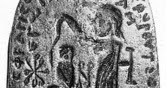
Abyzou. She became the scapegoat for the unexplainable, a tangible enemy against which protective measures, such as amulets and incantations, could be deployed. Early depictions on amulets often show her with unsettling fish- or serpent-like attributes, hinting at her primordial origins and her connection to chaotic, watery depths.
Unearthing the Abyss: Mesopotamian Roots and Greek Echoes
The etymological journey of
Abyzou offers a compelling glimpse into deep historical and mythological currents. Scholar A.A. Barb proposed a fascinating link between the demon
Abyzou and the primeval sea,
Abzu, of ancient Mesopotamian religion. While the name "Abyzou" itself appears to be a corrupted form of the Greek
ábyssos, meaning 'abyss' or 'depth,' its conceptual roots plunge much deeper into the mythological past.
The Mesopotamian
Abzu represented the primordial fresh water, often envisioned as an androgyne or asexual entity that later divided. From this primeval chaos emerged the male
Abzu (fresh water) and the formidable female
Tiamat (saltwater), whose story echoes as the
Tehom in the Hebrew Bible's Book of Genesis, describing the dark chaotic sea before Creation. This profound connection to the primordial waters is crucial, as many ancient female demons, most famously
Lilith, were said to have originated from these very depths.
The concept of the "abyss" underwent significant transformation as it journeyed through different cultural lenses:
- In the Septuagint, the Greek translation of the Hebrew Bible, Abyssos takes on a feminine grammatical gender despite its typical masculine ending in Greek, mirroring its association with the chaotic, life-giving yet destructive primeval sea.
- The Christian New Testament, particularly the Book of Revelation, further redefines Abyssos, translating it not merely as "the deep" but as the "bottomless pit" of Hell, a place of confinement for demonic forces.
Barb provocatively argued that the Sumerian
Abzu could be considered the "grandmother" of the Christian Devil, suggesting a direct lineage from ancient chaotic deities to later representations of ultimate evil. This evolution from a divine, albeit chaotic, entity to a distinctly demonic figure like
Abyzou, highlights the syncretic nature of ancient belief systems, where concepts and names transformed as they crossed cultural and religious boundaries. Parallels can also be drawn to ancient Greek female sea monsters, like the Gorgons, Sirens, and Harpies, who combined alluring danger with deadly intent, potentially deriving from this same deep-seated tradition of treacherous watery entities.
Abyzou: The Ancient Demon of Infant Mortality and Envy explores these profound connections in greater detail.
Abyzou in the _Testament of Solomon_: A Definitive Portrait
One of the most comprehensive and chilling literary depictions of
Abyzou comes from the
Testament of Solomon, a pseudepigraphic Jewish-Hellenistic text dated between the 1st and 4th centuries CE. This compendium of demonology presents King Solomon as a powerful sorcerer, gifted by God with a magical ring that allows him to bind, interrogate, and control demons for the construction of the Temple. It is within this narrative that
Abyzou, referred to as
Obizuth, is brought before the King.
Solomon's encounter with
Obizuth is a pivotal moment in understanding her nature. When interrogated about her activities, she boasts of her nightly wanderings across the world, specifically targeting women in labor and their fragile newborns. Her chilling confession reveals her primary aim: "to thwart births and harm the young." She describes her own form with a disturbing clarity: a "greenish gleaming face with dishevelled serpent-like hair," her body otherwise "covered by darkness," with piercing green eyes and invisible feet. This composite imagery — serpentine hair, a dark body, and elusive feet — reinforces her liminal nature, a creature both alluring and terrifying, connected to the earth's depths and the chaos of the abyss.
In the narrative, Solomon, armed with divine authority, subdues
Abyzou by invoking the Archangel Raphael. He then commands her to be bound and assigned a task that counters her destructive nature, often involving her writing out an oath to protect a household or a mother. The accounts within the
Testament of Solomon not only solidify
Abyzou's role as a child-killing demon but also provide a powerful example of ancient magical practices designed to combat such perceived threats. These texts served as spiritual weapons, offering rituals and incantations to protect against malevolent forces, thereby giving people a sense of control in an unpredictable world.
Beyond the Demon: Understanding the Cultural Context of Abyzou
While
Abyzou is undoubtedly a figure of fear, her legend is also a profound reflection of ancient human experience. The widespread belief in such child-killing demons, tracing back to Archaic Greek folklore figures like
Gello, a restless ghost preying on the vulnerable, underscores a universal human need to rationalize tragedy. In societies with limited medical knowledge, high infant mortality rates were a brutal reality, leaving parents and communities searching for explanations and mechanisms for protection.
The concept of
Abyzou provided a framework for understanding inexplicable loss. By personifying the forces behind miscarriages and infant deaths, communities could attempt to externalize, blame, and ultimately, combat these horrors through magical means. Amulets bearing her image, often inscribed with protective spells or the name of a powerful angel, were not mere trinkets but vital tools for reassurance and spiritual defense. They offered comfort and hope in a desperate time, embodying the belief that divine or magical intervention could avert catastrophe.
Understanding the mythology of
Abyzou offers more than just a delve into ancient demonology; it provides insight into the psychological landscape of our ancestors. It highlights:
- The power of narrative: How stories and myths helped ancient peoples cope with the uncontrollable aspects of life and death.
- The evolution of belief: How religious and cultural concepts meld and transform over centuries, from primordial entities to specific demonic figures.
- The human desire for control: How magical practices and rituals were developed to bring a semblance of order and protection against perceived supernatural threats.
Modern society has largely moved past the literal belief in demons like
Abyzou, thanks to advancements in medicine and scientific understanding. However, the study of her legend reminds us of the profound historical fears surrounding childbirth and the incredible resilience of communities striving to protect their most vulnerable members. It's a testament to how ancient cultures grappled with the mysteries of life and death, leaving behind a rich tapestry of folklore and belief. You can learn more about how these beliefs influenced daily life in
Abyzou in Folklore: Solomon, Amulets, and Ancient Fears.
Conclusion
From the primordial chaos of the Mesopotamian
Abzu to the defined malevolence of the Greek
Abyzou, this ancient demon offers a compelling journey through the origins of human fear and the evolution of supernatural belief. As a figure born of envy and blamed for infant mortality,
Abyzou is more than just a mythical villain; she is a powerful symbol of humanity's age-old struggle to comprehend, cope with, and conquer the tragic unknowns of existence. Her story, preserved in ancient texts and magical artifacts, continues to resonate, reminding us of the enduring power of folklore to reflect our deepest anxieties and our eternal quest for protection and understanding.