Abyzou: The Ancient Demon of Infant Mortality and Envy
In the rich tapestry of ancient folklore and myth, few figures embody the primal fears of humanity as profoundly as
Abyzou. This formidable female demon, known across the Near East and Europe, casts a long shadow over the most vulnerable moments of life: pregnancy, childbirth, and infancy. Blamed for miscarriages, stillbirths, and the sudden, inexplicable deaths of newborns, Abyzou personifies the anguish of loss and the gnawing grip of envy, her own barrenness fueling a destructive rage against the fertile world.
Her legend, a chilling reflection of the high maternal and infant mortality rates that plagued ancient societies, serves as a testament to humanity's enduring need to rationalize the inexplicable and to seek protection against unseen forces. Understanding Abyzou means delving into a world where spiritual and physical realities intertwined, and where ancient texts and protective amulets offered a desperate bulwark against the darkness.
The Genesis of a Demon: Tracing Abyzou's Ancient Roots
The name
Abyzou itself whispers of profound depths and primordial chaos. Scholars suggest its etymology is deeply rooted in the Greek word
ábyssos, meaning 'abyss' or 'depth'. This linguistic connection is more than mere nomenclature; it hints at a far older, more cosmic origin for this dreaded entity. The distinguished scholar A.A. Barb proposed a fascinating link between Abyzou and the ancient Mesopotamian concept of Abzu, the primeval, life-giving sea from which all creation emerged.
Initially conceived as an androgyne or asexual force, this primordial sea later bifurcated into the male Abzu (freshwater) and the female Tiamat (saltwater), the latter a monstrous entity mirrored in the Hebrew Bible's _Tehom_. It is from this deep, chaotic, primeval sea that many potent female demons, including the notorious Lilith, were said to have sprung. The idea of dangerous, alluring female sea monsters in ancient Greek tradition—such as the Gorgons, Sirens, and Harpies—may also stem from this same ancestral tradition, blending irresistible charm with deadly intent. To explore this fascinating lineage further, delve into
From Abzu to Abyzou: Tracing the Abyss Demon's Origins.
The concept of the 'abyss' also resonates within Abrahamic traditions. In the Septuagint, the Greek translation of the Hebrew Bible, _Abyssos_ is notably treated with feminine grammatical gender, reflecting its equivalence to Abzu as the dark, chaotic waters preceding Creation. This ominous term reappears in the Christian New Testament, particularly in the Book of Revelation, where it is translated not merely as "the deep" but as the terrifying "bottomless pit" of Hell. Barb's analysis daringly posits the Sumerian Abzu as the "grandmother" of the Christian Devil, underscoring the profound and ancient roots of this demonic archetype. Furthermore, the tradition of child-killing demons akin to Abyzou can be traced back to Archaic Greek folklore from the 6th–7th centuries BCE, with figures like Gello embodying the restless ghost preying on the vulnerable, particularly women and infants.
Abyzou's Malicious Manifestations: Envy, Mortality, and Appearance
At the core of Abyzou's malevolence lies a profound and destructive envy, born from her own infertility. Barren herself, she became a symbol of _phthonos_ (envy) in its most virulent form, directing her wrath against human mothers and their offspring. This driving motivation explains her sleepless, relentless roaming across the world, specifically targeting women in labor and defenseless infants. Her methods were varied and terrifying: she was blamed for inducing miscarriages, causing stillbirths, or inflicting sudden death upon newborns. Legends recount her strangling infants, or afflicting them with debilitating ailments such as deafness, blindness, or madness.
Abyzou is known by a multitude of names across various cultures, reflecting her pervasive influence and the fear she inspired. These include Abizou, Obizu, Obizuth, Obyzouth, and Byzou, among others. In Coptic Egypt, she was identified with the demon Alabasandria, while in Byzantine culture, she merged with the terrifying figure of Gylou. This multiplicity of names and identities highlights her role as a universal embodiment of the darkest aspects of maternal and infant mortality.
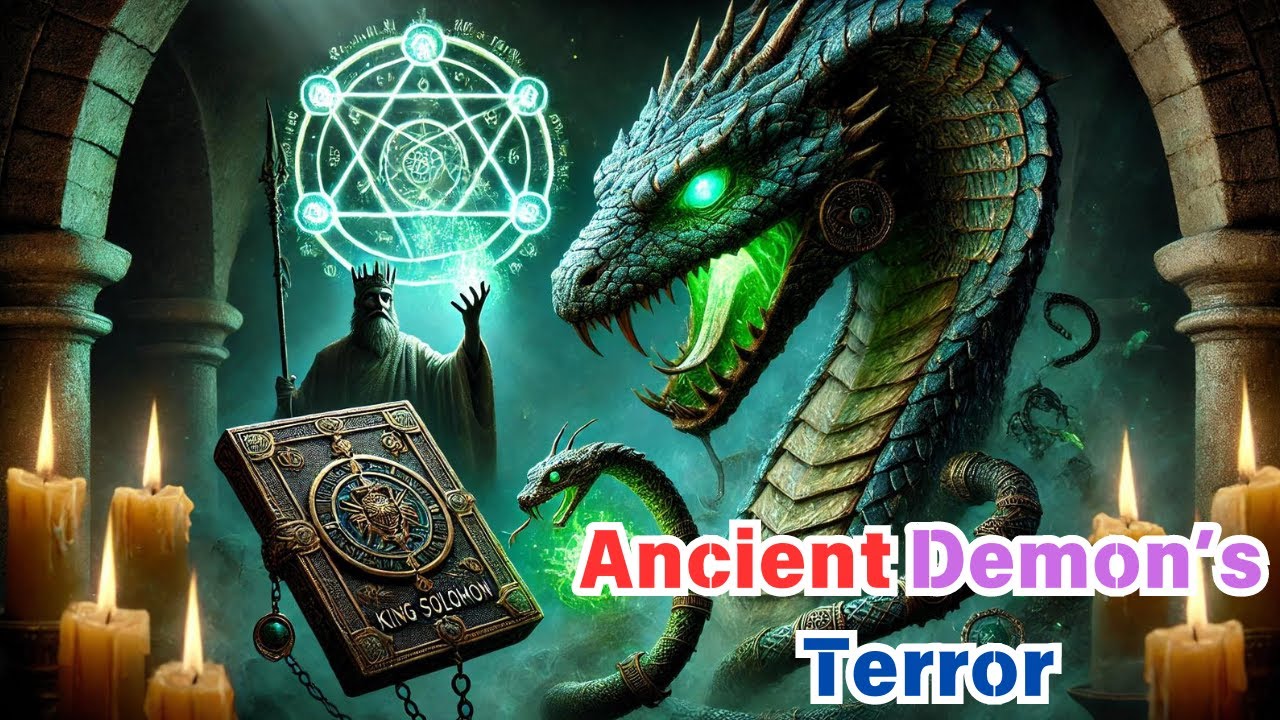
Her most detailed literary depiction comes from the *Testament of Solomon*, a Jewish-Hellenistic compendium of demonology dated between the 1st and 4th centuries CE. In this ancient text, King Solomon encounters a host of demons, binding and interrogating each one. When he confronts Abyzou (referred to as Obizuth), she reveals a truly chilling form: a dark-bodied woman with a "greenish gleaming face," disheveled, serpent-like hair, green eyes, and invisible feet. She confesses her nightly ritual of circling the globe, actively seeking out women in labor to thwart births and harm the young. It's a stark portrait of a creature consumed by its own tragic curse, endlessly inflicting that tragedy upon others.
Confronting the Abyss: Solomon and the Power of Amulets
The *Testament of Solomon* provides not only a vivid description of Abyzou but also a powerful narrative of humanity's attempt to confront and control such forces. King Solomon, endowed with divine wisdom, successfully interrogates and binds Abyzou, forcing her to reveal her true nature and her weaknesses. In a pivotal moment, she admits that she can be repelled by the invocation of the archangel Raphael and by specific protective amulets.
Indeed, protective amulets featuring
Abyzou herself, often depicted with fish- or serpent-like attributes, became a common sight in antiquity. These talismans, inscribed with her name and other magical incantations, were believed to ward off her evil influence, especially from pregnant women and newborns. The irony of using the demon's image to repel her own maleficence speaks volumes about the pragmatic yet deeply superstitious mindset of the era. These artifacts were more than mere trinkets; they were tangible expressions of hope and a psychological shield against overwhelming anxieties. For a deeper dive into these ancient protective measures, read
Abyzou in Folklore: Solomon, Amulets, and Ancient Fears.
Practical Tips from Ancient Wisdom:
- Understanding the Power of Symbols: Just as ancient amulets offered comfort, consider how symbols of protection or comfort can still play a role in managing anxieties today, even if those anxieties are now understood through a medical lens.
- Community Support: The communal rituals and shared belief in protection against demons like Abyzou fostered strong community bonds. Historically, women were often surrounded by female relatives and midwives during childbirth, providing physical and emotional support against both tangible and intangible threats. Modern support networks for new mothers offer a similar, vital function.
- Acknowledging Fears: The myth of Abyzou gave voice to unspeakable fears. Recognizing and addressing anxieties surrounding childbirth and parenting, whether through open conversation, therapy, or support groups, is a contemporary echo of this ancient need to confront the 'demons' within and without.
Enduring Fears: Abyzou's Legacy in Modern Understanding
While modern medicine has demystified many of the causes of infant mortality, the legend of
Abyzou remains a potent and fascinating artifact of human history. She stands as a stark reminder of a time when the causes of illness and death, particularly among the most vulnerable, were inexplicable and therefore attributed to supernatural malevolence. The consistent theme of envy, rooted in infertility, adds a layer of psychological depth to her character, reflecting timeless human anxieties about reproductive success and the profound grief associated with its failure.
The enduring presence of Abyzou in folklore, from ancient Mesopotamia to Byzantine culture, underscores the universal nature of parental fear and the quest for protection. Her story is not just a relic of superstition; it is a window into the emotional landscape of past civilizations, revealing their deep-seated anxieties and their methods of coping with the unpredictable forces of life and death.
Even today, though the demon herself may seem a distant concept, the underlying fears she represents—the fragility of life, the pain of loss, and the desire to protect our children—continue to resonate. Abyzou serves as a powerful symbol, linking us to our ancestors' struggles and reminding us of the enduring human capacity to create narratives that help us navigate the mysteries of existence, even the darkest ones.
In conclusion,
Abyzou is far more than a mere demon from ancient texts. She is a multi-layered archetype, born from the depths of primordial chaos and shaped by human suffering. Her story intertwines linguistic evolution, religious syncretism, and the deeply personal experience of maternal envy and loss. From the terrifying imagery of her serpent-like hair to the protective power of the amulets bearing her likeness, Abyzou encapsulates a powerful narrative of fear, protection, and the enduring human spirit's attempt to make sense of life's most profound tragedies. Her legend continues to captivate, offering a chilling glimpse into the ancient world's most visceral anxieties.